


You just got your bikini. Maybe it's a new Bow Babe Contrast set ($17.99 per piece) you've been living in since spring break started, or maybe you've had a favorite suit that's starting to look a little tired. Either way, the single biggest factor in how long a bikini stays vibrant, snug, and beautiful isn't price — it's care. A $200 designer suit treated carelessly will look worse in one season than an Audi Swim set that gets washed properly every single time.
Bikini fabric — especially high-performance blends like the Luxe-Flex nylon-spandex and ECONYL recycled nylon used in the Bow Babe Collection — is engineered to hold its stretch, color, and shape through seasons of real use. But that engineering only holds up when you give it the right care. Chlorine, salt water, sunscreen, and heat are the four enemies of swimwear elastic, and every one of them is easily neutralized with a two-minute rinse and a smart wash routine. Here's exactly how to do it — and how to keep your thong bikini bottoms and tops looking fresh all season long.

Step 1: The Golden Rule — Rinse Immediately After Every Swim
If you do nothing else on this list, do this: rinse your bikini under cold, fresh water immediately after you get out of the water. Don't wait until you get home. Don't roll it up in a towel for three hours. Rinse it right there, wearing it if possible, as soon as you exit the ocean or pool.
Why? Because every second that chlorine, salt, or sunscreen sits on your fabric, it's working. Chlorine is an oxidizer that breaks down the elastic fibers that keep your suit fitting snugly. Salt water causes micro-abrasion and draws moisture out of the fabric. Oil-based sunscreens coat the fibers and make the elastic lose its snap over time. A 60-second rinse under fresh water stops all three in their tracks.
After the Ocean
Salt crystals left on swimwear fabric abrade the elastic when you move. Sunscreen residue — especially reef-safe mineral formulas — also accumulates in the weave. After ocean swimming, rinse thoroughly until the water runs clear. If you can feel any slickness from sunscreen, that's your cue to hand wash tonight.
After the Pool
Chlorine is the silent killer of swimwear elastic. Pro tip: before you even get in the pool, rinse your bikini in fresh water first. The fabric absorbs water and has less room to absorb the chlorinated pool water. It sounds counterintuitive, but it genuinely reduces how much chlorine your suit takes on. After swimming, rinse again — immediately.
Step 2: Hand Washing Is the Gold Standard
Every couple of wears — or after any especially active swim session — give your bikini a proper hand wash. This is the method that professional swimwear designers, including the team behind your Bow Babe Contrast Top Black ($17.99), recommend above all others.
Step-by-Step Hand Washing Guide
- Fill a sink or basin with cool water. Never hot — heat degrades elastic faster than almost anything else.
- Add a small amount of gentle detergent — something designed for delicates or specifically for swimwear. A teaspoon is plenty. Avoid regular laundry detergent; the enzymes are too harsh for spandex blends.
- Gently work the fabric by squeezing and releasing — don't scrub, twist, or wring. Pay attention to the liner (if applicable) and any tie areas where sweat and sunscreen accumulate.
- Rinse twice in clean cool water until all soap is gone. Any leftover detergent residue can irritate skin and break down the fabric over time.
- Gently squeeze (never wring) excess water and lay flat immediately.
The Vinegar Trick for Odors
Got lingering chlorine smell even after washing? Soak your suit for 20–30 minutes in a solution of 1 part white vinegar to 4 parts cold water. Vinegar neutralizes chlorine residue naturally without damaging the fibers. Rinse thoroughly after. This also works as a color-set soak for brand-new suits — it helps lock dye into the fibers before their first wear.
Step 3: Machine Washing — When It's OK and How to Do It Safely

We know — not everyone has time to hand wash after every wear. Machine washing is acceptable if you follow these rules without exception:
- Always use a mesh laundry bag. This prevents the ties, straps, and elastic from catching on the drum or tangling with other garments.
- Cold water only. Select the delicate or gentle cycle — never normal or heavy.
- Mild detergent, no fabric softener. Fabric softener leaves a coating on synthetic fibers that traps bacteria and degrades elasticity. Skip it entirely.
- Wash alone or only with other swimwear. Washing with towels or denim causes friction that pills and abrades the fabric.
- Never wash with bleach. Even "color-safe" bleach formulas are too harsh for the Luxe-Flex blend. When in doubt, skip it.
The Bow Babe Collection's ECONYL recycled nylon is engineered for durability — it's made from regenerated fishing nets and ocean plastic, which means it's inherently resilient. But even ECONYL benefits from gentle washing. When you take care of it, it takes care of you. That's the deal.
Step 4: Drying Your Bikini the Right Way
This is where most people unknowingly ruin their suits. The dryer is off-limits — full stop. Tumble dryers expose your swimwear to sustained heat that melts elastic fibers, shrinks fabric, and fades color in ways you'll notice after just one cycle. The same goes for drying your suit directly on a metal hook or hanger, which leaves rust stains and stretches out the thin strap fabric.
How to Air Dry Properly
- After washing, lay the bikini flat on a clean, dry towel and gently roll the towel up to absorb excess water. Press — don't wring.
- Lay your suit flat on a second dry towel or a drying rack to air dry.
- Keep it out of direct sunlight while it dries. UV rays fade color and dry out elastic fibers. Shade or indoor drying is ideal.
- Never dry over a radiator, heat vent, or near a dryer exhaust — heat is heat, regardless of the source.

Step 5: Storage Between Wears and Between Seasons
How you store your bikini matters more than most people think. For daily storage between wears, keep suits in a cool, dry drawer — never balled up in a wet beach bag (even for a few hours, this breeds bacteria and fades elastic). Make sure the suit is completely dry before putting it away.
For seasonal storage, fold your suits gently (don't hang them — sustained hang-stretching deforms the shape) and store them in a breathable cotton bag or drawer. Adding a cedar block nearby helps prevent musty odors without using chemicals that could transfer to the fabric. Check out our spring break packing guide for tips on keeping suits fresh while traveling.
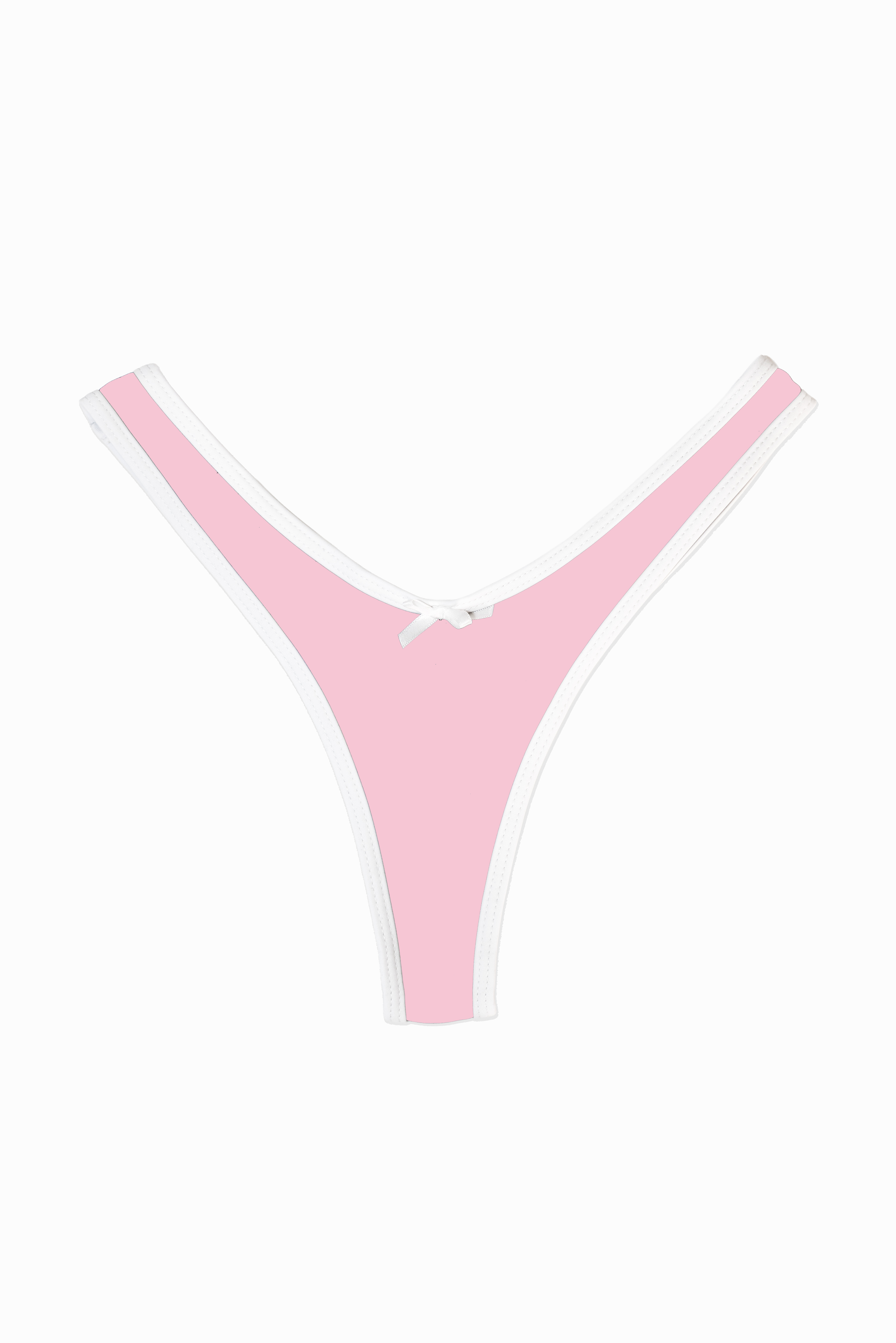
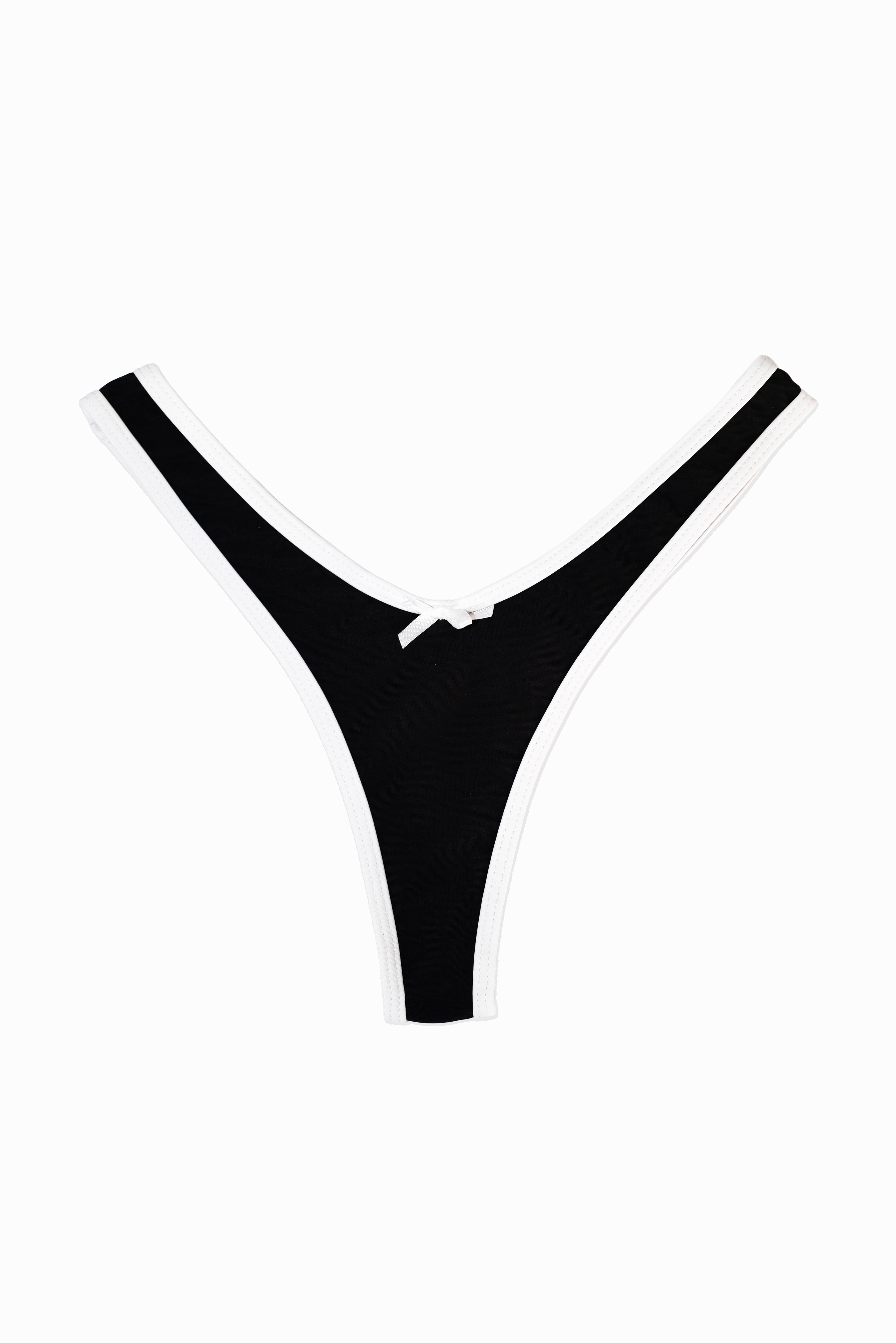
Rotation is your friend. If you're wearing the same suit every single day of a week-long vacation, the elastic doesn't get a chance to recover. Bring at least two suits — like the full black and sky blue Bow Babe thong bikini collection — and alternate them so each one has 24 hours to decompress and fully dry between wears. Your suits will last noticeably longer.
Step 6: Special Care for Luxe-Flex and ECONYL Fabrics
If you own an Audi Swim piece, you're working with two distinct fabric technologies that each reward smart care:
Luxe-Flex Nylon-Spandex is a four-way stretch performance blend engineered for a body-conforming fit that holds across movement. The stretch memory in Luxe-Flex is preserved by cold water washing and air drying. Heat and harsh chemicals are its only real vulnerabilities. Treat it right and it snaps back to its original shape season after season.
ECONYL Regenerated Nylon — used in select Audi Swim pieces — is made from recovered ocean fishing nets and post-consumer plastic. It has all the performance properties of virgin nylon with a significantly lower environmental footprint. ECONYL is inherently resistant to chlorine and salt water compared to standard synthetics, but it still benefits from the same rinse-and-hand-wash routine. This is one of the reasons brands like ours choose it: it performs better and lasts longer than conventional swimwear fabric, especially for people who actually swim in their suits rather than just posing for photos.
If you're interested in more sustainable swimwear choices, check out our spring/summer 2026 swimwear trends guide where we break down the sustainability-forward silhouettes taking over this season.
Complete the Look: The Full Bow Babe Care Kit
The best bikini care starts with suits worth caring for. Here's the full Audi Swim Bow Babe Collection — built to last when you treat it right:
- Bow Babe Contrast Top — Black ($17.99)
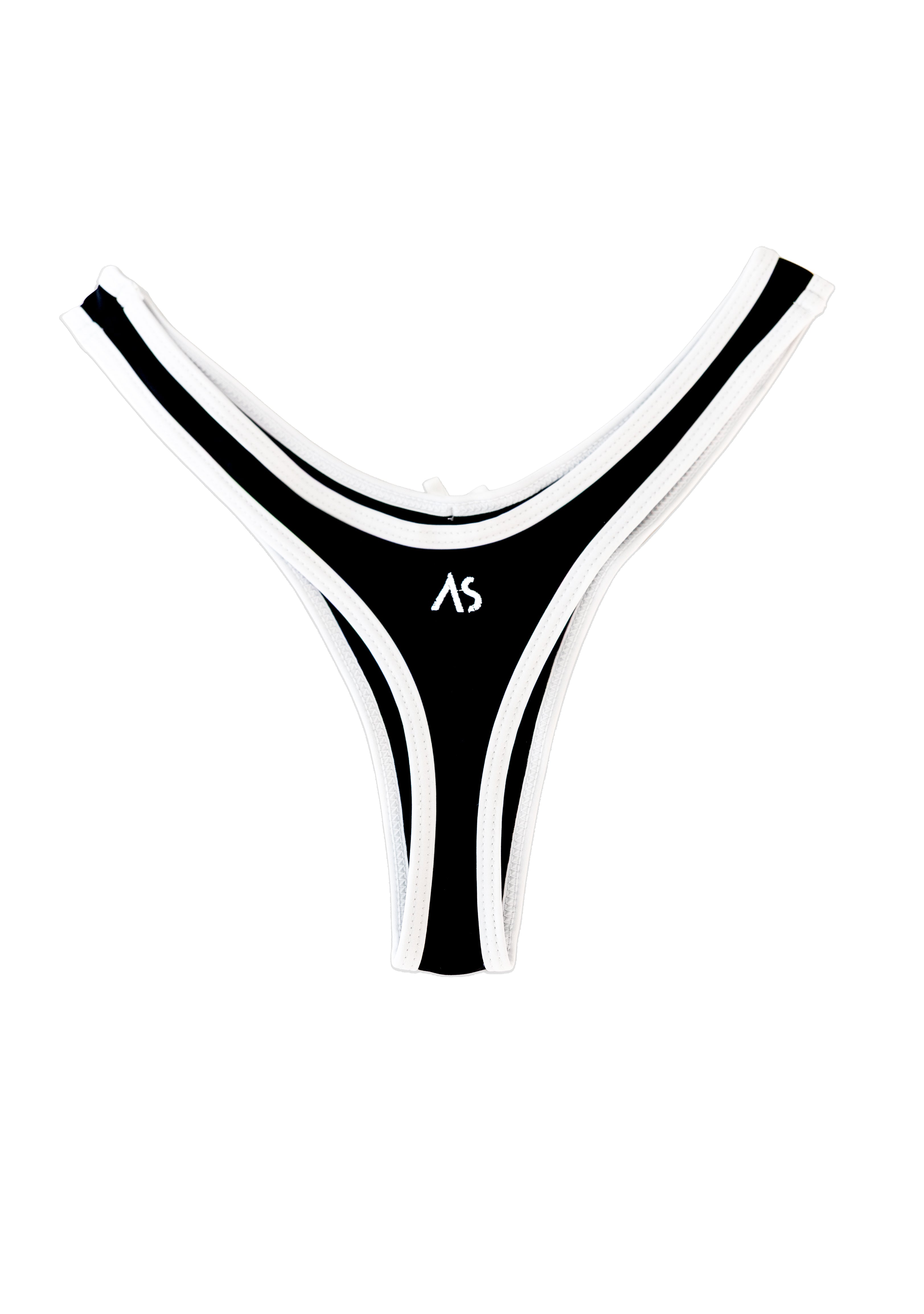
- Bow Babe Contrast Bottoms — Black ($17.99)
- Bow Babe Contrast Top — Pink ($17.99)
- Bow Babe Contrast Bottoms — Pink ($17.99)
- Bow Babe Contrast Top — Sky Blue ($17.99)
- Bow Babe Contrast Bottoms — Sky Blue ($17.99)
- Beach Muse Crochet Cover-Up ($29.99) — hand wash only, lay flat to dry
- Golden Hour Belly Chain ($12.99) — remove before washing your suit, rinse separately with fresh water
Use code WELCOME15 for 15% off your first order. A full Bow Babe set in all three colorways — everything you need to rotate through a week-long trip — runs under $110, which is less than a single piece at most resort boutiques.
Frequently Asked Questions
How often should I wash my bikini?
Rinse your bikini after every single wear — ocean or pool, no exceptions. A full hand wash is recommended every 3–5 wears, or after any session where you were especially active or heavily applied sunscreen. If you wore it to a pool party where you were in and out of chlorinated water for hours, wash it that night. For relaxed beach days where you mostly stayed dry, every few wears is fine. Your Bow Babe bottoms will tell you — if the elastic starts feeling looser after washing rather than before, you're washing too infrequently.
Can I use regular laundry detergent on my bikini?
It's not ideal. Regular laundry detergents contain enzymes and surfactants optimized for cotton and synthetic blends heavier than swimwear — they can strip color and degrade spandex elastic over time. Use a detergent formulated for delicates or swimwear. In a pinch, a tiny drop of gentle dish soap (like Dawn) works better than regular detergent. Never use bleach or fabric softener on any piece from the Bow Babe bikini collection.
How long should a good bikini last?
With proper care — cold rinse after every wear, occasional hand wash, air dry in shade, rotation between suits — a quality bikini should last 2–3+ seasons of regular wear. The ECONYL and Luxe-Flex fabrics in the Bow Babe Collection are among the most durable swimwear materials on the market. The suits that die in one season are almost always killed by dryer heat, extended chlorine exposure, or being left wet in a bag overnight. Get the care right and your investment stretches dramatically further. Need help choosing your first thong bikini? Start with our honest guide for first-timers.
The Bottom Line
Swimwear care isn't complicated — it's just consistent. Rinse immediately, hand wash regularly, air dry away from heat and direct sun, rotate between suits, and store dry. Follow those five rules and your bikinis will outlast anything you could throw at them. Because honestly, the best suit isn't the most expensive one. It's the one you actually take care of.
Ready to build a collection worth caring for? Explore the full Audi Swim collection and find the styles that match how you actually live — whether that's a week in Cancun, daily laps in a pool, or a long weekend at the lake. And if you need more style guides, check out our complete string bikini guide or see how body-positive icons like Serena Williams approach swimwear confidence.
Sources: Arm & Hammer Laundry — How to Wash Swimsuits; ROXY Bikini Care Guide; Simply Swim — Swimwear Care Guide.














Share: